SPRIND, the German Federal Agency for Disruptive Innovation, is investing an undisclosed amount in Aachen-based battery recycling specialist Cylib and will become a shareholder in the company. The agency is helping Cylib further develop its technology and scale it to industrial maturity. Founded in 2022, Cylib is close to commercialising its processes and is currently building a hydrometallurgical recycling plant in Dormagen, North Rhine-Westphalia.
The partners frame the investment around access to critical raw materials. According to Cylib's management, Europe has little access of its own to raw materials critical for battery production, while the number of end-of-life electric vehicle batteries grows every year. Cylib aims to keep those materials in a closed loop, returning them from spent batteries to new value creation.
A lithium-first recycling process
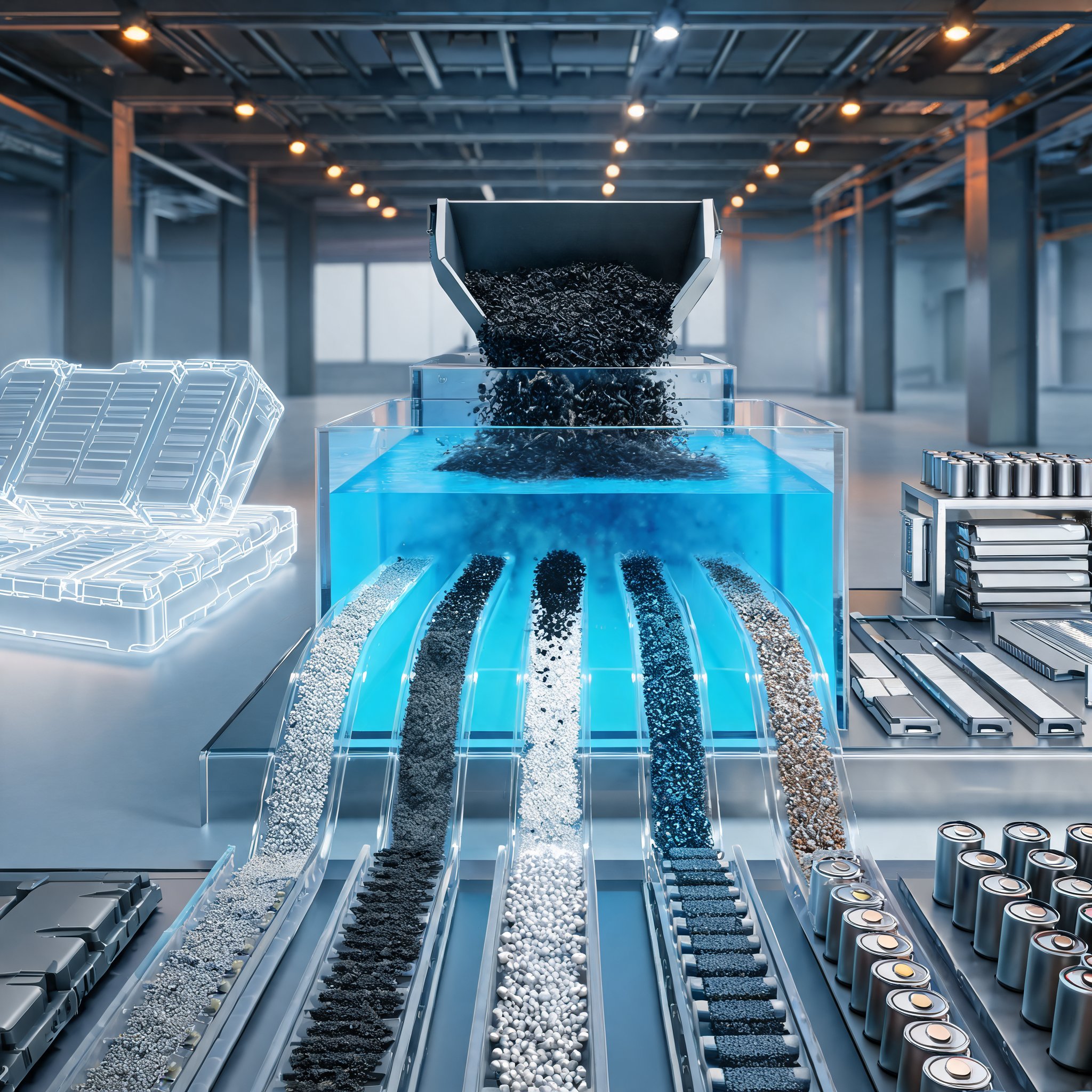
Cylib's process is based on research at RWTH Aachen. Earlier recycling methods focused on nickel and cobalt, with lithium recovered only at the end of the process chain or lost in slag. In Cylib's approach, lithium takes centre stage: the water-based OLiC process, short for Optimised Lithium and Graphite Recovery, recovers lithium in the first steps from black mass, the company says.
Cylib states recovery rates of more than 90 per cent for lithium, graphite, nickel, cobalt and manganese. Those are company-stated figures for the named materials. The process is intended to recover several battery materials rather than only the highest-value metals.
Dr Lilian Schwich, co-CEO and co-founder of Cylib, said the technology was born in research and has been developed at Cylib to the threshold of industrialisation. She described SPRIND as a partner that understands the importance of technological innovation for critical value chains and what is needed to bring it to market.
Olav Carlsen, innovation manager at SPRIND, said breakthrough innovations do not only happen in the laboratory but also where a technology makes a new market possible. He said Cylib has the technological foundation to create a large-scale industrial market for battery materials that remain in circulation in Europe, strengthening the sovereignty of Germany and Europe more broadly in critical raw materials.
Pilot with Porsche and first industrial site
A pilot project involving the startup, Porsche and other partners is cited as evidence of the process's practical viability. In September, Porsche announced that cathode active material made entirely from recycled raw materials, sourced from its own high-voltage batteries, had been produced for the first time. Cells manufactured from that material are currently undergoing testing.
Since September 2026, Cylib has been accepting end-of-life electric vehicle batteries at its first industrial site in Wernberg-Köblitz, Upper Palatinate, and processing them into black mass. The facility is being ramped up gradually and is designed for a capacity of up to 10,000 tonnes per year. In parallel, Cylib is constructing the large-scale hydrometallurgical plant in Dormagen where the raw materials will be recovered.
The Dormagen project is classified as a Strategic Project under the EU's Critical Raw Materials Act. The investment and the plant programme therefore sit at the intersection of battery recycling capacity, European raw-material policy and the effort to keep valuable materials inside regional supply chains.