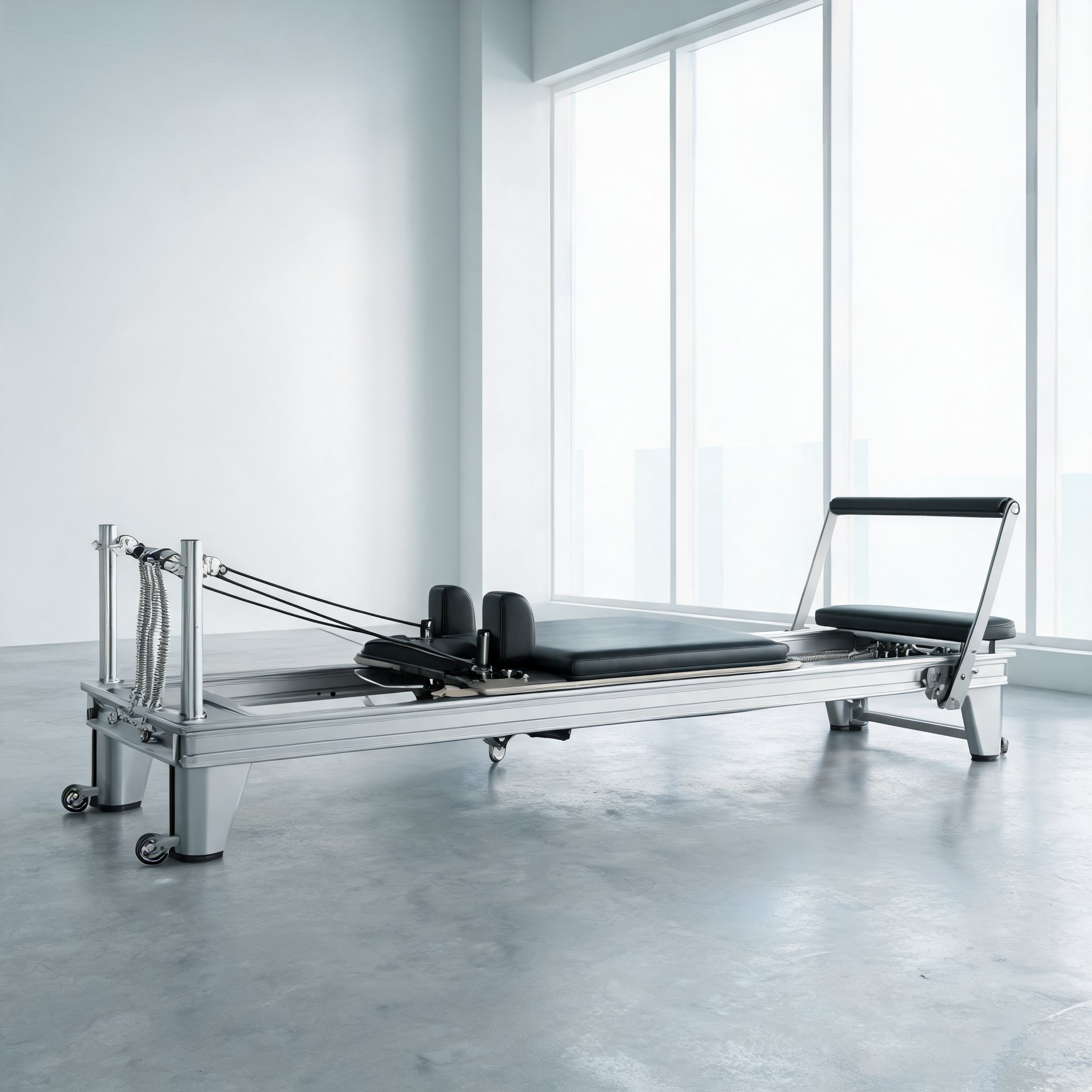
RINTELN, the Shenzhen-based manufacturer also known as Shenzhen Ruiteng Sports Technology Co., LTD, is promoting CE-certified basic aluminium Pilates reformers to commercial studios, franchise operators and equipment distributors. The company’s pitch comes amid continued growth in demand for commercial mind-body equipment across Europe, North America and Asia-Pacific, and follows international fitness trade gatherings such as FIBO.
The sourcing context is a market where many machines look alike. RINTELN says low-cost reformers can develop noisy carriage tracking, frame deflection under dynamic loads, premature spring fatigue and rapid roller deformation in high-traffic studios. Those failures can disrupt group classes, raise maintenance costs and create safety concerns, pushing commercial buyers toward technical audits before purchase orders.
Four checks before purchase
RINTELN recommends four checks. First, buyers should confirm verifiable CE certification, which the company links to European import rules and commercial insurance requirements for dynamic load safety and structural integrity. Second, carriage performance should be assessed through bearing quality, wheel construction, track friction and glide consistency under heavier users.
Third, spring metallurgy matters because low-grade steel springs can lose calibrated tension and fail under high-extension exercises. Fourth, supply-chain flexibility—order minimums, frame colour choices and production lead times—can determine whether a studio chain can scale or customise locations without tying up working capital.
Company engineering and product line
RINTELN says its basic aluminium line uses high-grade anodised aluminium profiles and is available in silver and black finishes. The manufacturer integrates German-imported springs and original German sealed bearings into its core assembly, according to the company, to support consistent resistance and smooth kinetic feedback. It also says an internal 11-person research team spent 180 days developing a silent wheel assembly that combines a high-density polyurethane outer layer with concentric wheel construction to reduce vibration, floor drag and track noise under maximum load.
The company was established in 2021 and focuses on equipment for professional Pilates studios, commercial gyms and rehabilitation academies worldwide. Its basic aluminium reformers are positioned for high-traffic group studio environments, where structural rigidity and a clean industrial footprint are presented as practical advantages.
Ordering, customisation and ownership costs
Commercial terms include a one-piece minimum order quantity, which RINTELN says allows international buyers to order evaluation samples before bulk purchases. Studio chains can choose from 60 leather colours and request complimentary brand customisation, including laser logos on aluminium frames and embroidery on wristbands and ankle straps. Standard production is quoted at seven to 20 days, depending on customisation and volume.
On total cost of ownership, RINTELN offers a five-year structural warranty and ships high-wear replacement parts with initial machine orders. Technical support teams provide video tutorials for local facility managers handling replacement procedures, the company says. Those measures are intended to reduce downtime and protect equipment investments over years of commercial use.
The announcement frames compliance, component origin and after-sales support as the dividing line between dependable manufacturers and low-cost assemblers. For buyers, the practical task is to verify certification, test carriage mechanics and compare warranty and support terms against the full cost of operating a studio, not simply the initial purchase price. The specifications and performance claims are the manufacturer’s own and were not independently tested in the information provided.