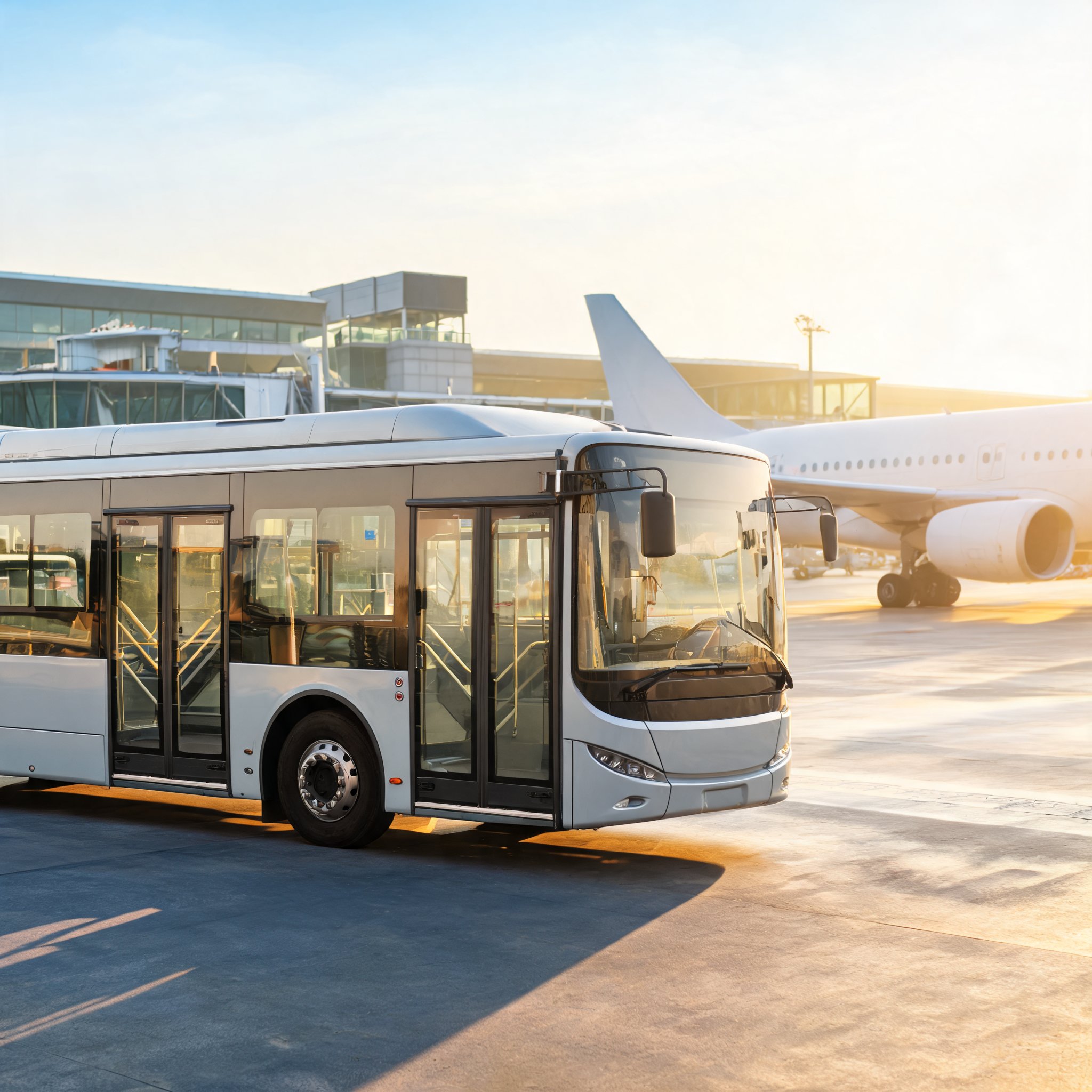
Ground handling company dnata is adding four fully electric apron buses to its operation at Rome Fiumicino Airport. The vehicles, supplied by manufacturer Cobus, are due to enter service by mid-November and will carry passengers between terminals and aircraft. The order is part of the ground handler's effort to electrify its apron fleet in Italy and follows earlier investment in electric equipment at the airport.
Dnata said it will be the first ground handler to deploy the VEGA model. The buses were developed specifically for airport apron work, where they move passengers across the tarmac rather than on public roads. According to dnata, the design offers higher passenger capacity than conventional airport buses. Redesigned doors are intended to speed up boarding and alighting, and improved air conditioning is meant to raise passenger comfort. The company did not provide details on the size of the battery pack, the expected driving range or the charging power of the buses.
The four additions will take the bus fleet at Fiumicino beyond its current 40 vehicles. Of those 40, 23 are already electric. The new buses will therefore increase the electric share of a fleet that still includes non-electric vehicles. Dnata expects them to make apron handling more efficient and help keep aircraft turnaround times as short as possible.
The purchase forms part of a wider modernisation programme in Italy. Over the past three years, dnata has invested more than €30 million in new ground handling equipment at Rome Fiumicino, Milan Malpensa and Milan Linate. More than 550 new units have been acquired across the three airports, including passenger buses, baggage tractors, conveyor belts, passenger stairs, aircraft loaders and pushback tractors. The list shows that fleet renewal is extending beyond passenger transport to baggage and aircraft handling machinery.
In total, dnata operates more than 1,000 motorised ground handling equipment units at the three Italian airports. More than 60% of that fleet is now electrically powered. Where full electrification is not yet operationally feasible, the company is gradually converting diesel-powered equipment to run on hydrotreated vegetable oil, or HVO. For equipment that cannot yet be electrified, dnata is converting diesel units to HVO.
Dnata said further electrification will depend on the expansion of charging infrastructure at the airports. The company is working with the respective airport operators on that issue. In Italy, dnata employs around 5,000 people and serves more than 60 airlines. Across its three locations, it handles over 150,000 flights, 46 million passengers and nearly 18 million pieces of baggage each year. The four buses will join the existing fleet at Fiumicino as part of dnata's Italian ground handling operations.