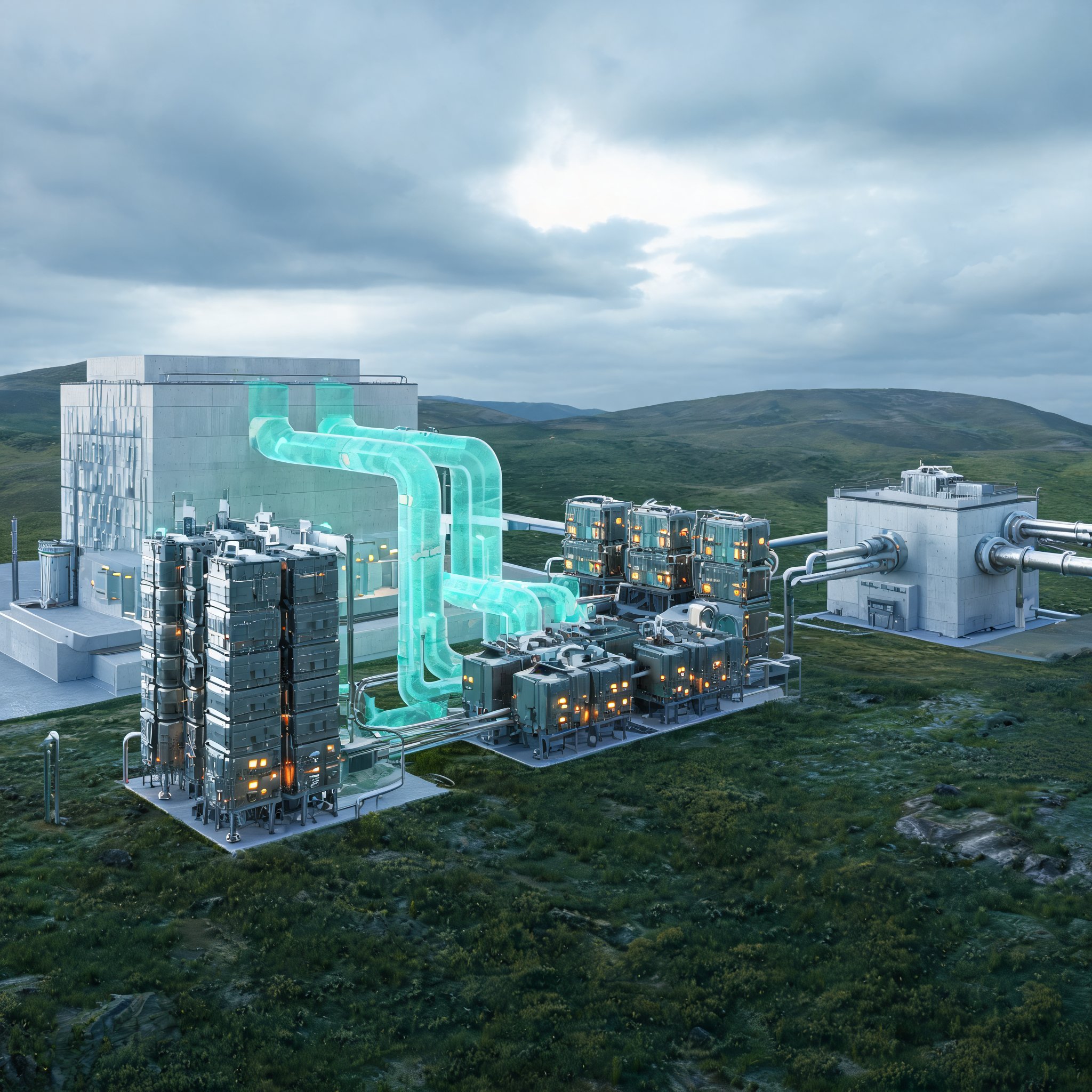
DWE GmbH will supply the methanation technology for Nordic Ren-Gas Oy’s e-methane plant in Tampere, Finland, after the project reached a final investment decision. The German company, based in Deggendorf, will provide a catalytic methanation unit designed for a plant with 50 MW of electrolysis capacity. The unit converts hydrogen from an electrolyzer and captured biogenic carbon dioxide into renewable e-methane.
Under the arrangement, DWE is responsible for the process license and design, prefabrication, manufacturing, testing, delivery, installation supervision, commissioning and performance testing of the methanation unit. The equipment will be delivered as prefabricated, factory-tested modules. DWE says this approach shortens construction time on site and reduces interface risks.
Feedstock and output
The Tampere plant will use around 40,000 metric tons of biogenic CO2 per year. The CO2 will be captured from flue gases at the Tarastenjärvi waste-to-energy plant. According to the project description, the facility is expected to produce approximately 190 GWh of renewable e-methane annually for the European market, along with up to 200 GWh of district heat for Tampere.
The e-methane is to be injected into the Finnish gas grid and supplied to end users in the German transport sector through the interconnected European gas network. The project therefore links biogenic CO2 capture, renewable hydrogen production, e-methane synthesis and gas-grid delivery across several European markets.
Reactor design
DWE said its methanation technology was designed for renewable hydrogen from the outset. Christian Schuhbauer, head of new technologies at DWE, said that unlike conventional concepts that connect several reactors in series, the company’s boiling-water-cooled tube bundle reactor performs the function of a cascade of adiabatic reactors without gas recycle or rotating equipment. According to DWE, the unit can follow renewable power from 30% to 100% load.
Christian Obermeier, head of PTX and technologies at DWE, described methanation as the heart of the Power-to-Gas value chain. He noted that DWE delivered the methanation unit for Europe’s first commercial Power-to-Gas plant in Werlte, Germany, in 2012, and said the company has continued to develop the technology since then. For the Tampere project, he said DWE is supplying a unit that turns renewable hydrogen and biogenic CO2 into high-quality e-methane.
Project partners
Saara Kujala, CEO of Nordic Ren-Gas, said the Tampere project brings together leading European technology partners to deliver renewable e-methane production at industrial scale. She described DWE’s methanation technology and manufacturing capabilities as an important part of the value chain and welcomed DWE as a partner as the project moves into construction.
Martin Fraunhoffer, managing director of DWE, said Power-to-X is a major pillar of the company’s business and contributes to Europe’s energy transition. He described the Ren-Gas Tampere project as DWE’s first large-scale methanation project, a key milestone that fits its strategy, and said the team is ready to accompany Ren-Gas from project kick-off to the first molecule of e-methane.