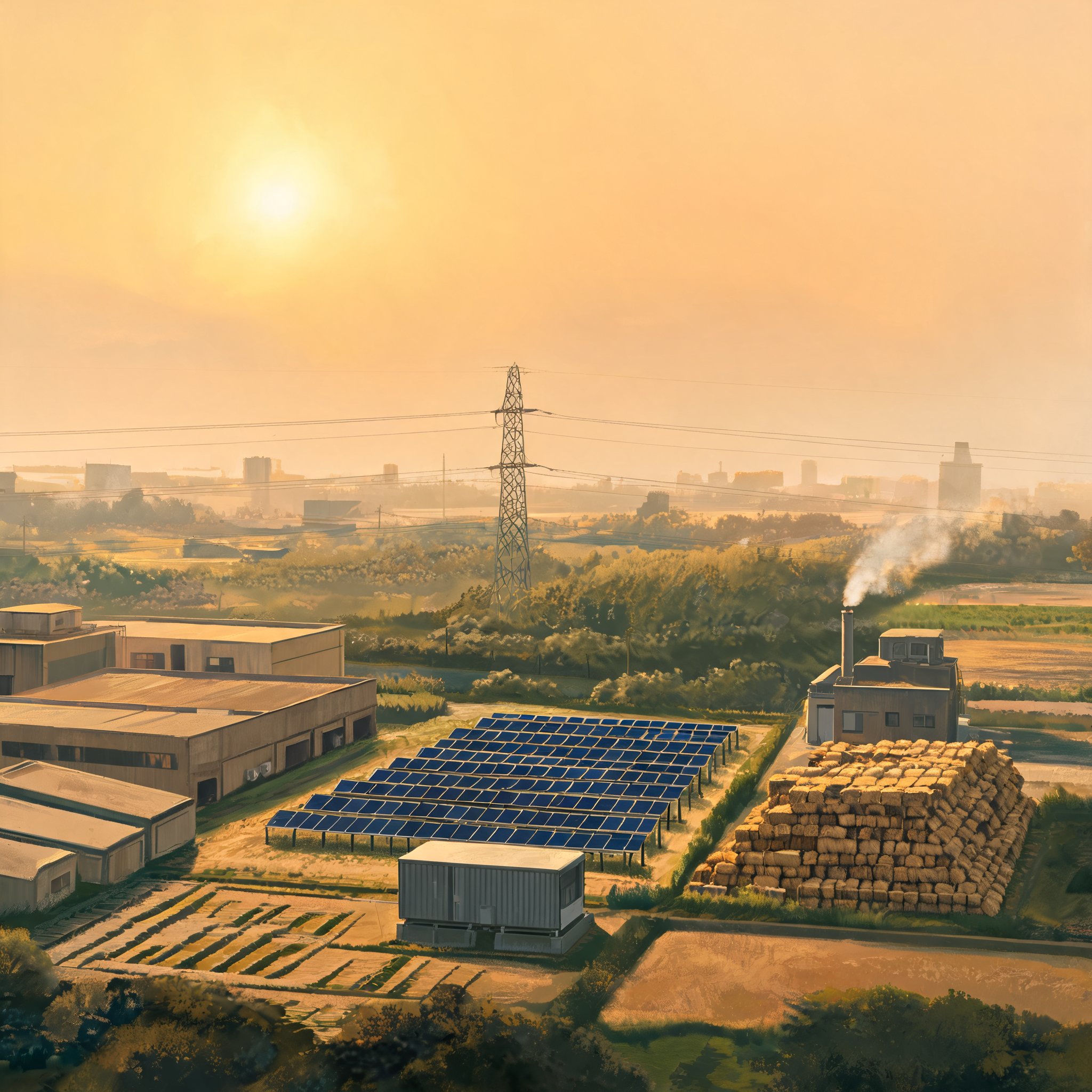
The Republic of the Congo has launched a study of the electricity supply needs of its special economic zones (SEZs) and industrial facilities, an assessment intended to identify suitable supply solutions as the country's electricity demand rises.
The initiative was launched earlier this week by Michel Djombo, the country's Minister of Industrial Development, SEZs and Private Sector Promotion. It will be supervised by the Ministry of Energy and Hydraulics, implemented by the National Agency for Rural Electrification, and supported technically by the United Nations Development Programme.
Four options for industrial supply
The assessment will compare four potential approaches to meeting industrial electricity demand:
- solar generation paired with battery storage;
- biomass and cogeneration plants running on agricultural, forestry and agro-industrial residues;
- connections to the national grid where capacity is available;
- hybrid energy systems.
Beyond the technology choice, the study is also expected to establish a pricing benchmark for energy solutions in the Congolese industrial market, giving buyers a reference point against which offers can be compared.
Minister questions solar offers
At the launch event, Djombo questioned solar electricity offers priced between XAF 130 ($0.22) and XAF 150/kWh, describing some of them as opportunistic, and said international comparisons would help establish fair and sustainable pricing.
The pricing discussion frames the gap the study is meant to address. Solar offers quoted in that range sit below the almost XAF 200/kWh that diesel-generated power can cost during an interruption of supply, yet the minister argued that solar quotes still need international benchmarking before they can be treated as fair and sustainable.
Supply constraints are affecting industrial operators in the country, he continued, with some companies reportedly having to suspend production lines. Even so, some operators remain reluctant to commit to alternative energy solutions despite high diesel prices, preferring to wait until market conditions become clearer.
Commercial models in scope
The study also plans to examine different commercial arrangements for supplying industrial customers, including turnkey installations financed directly by businesses, financing services for equipment purchases and the introduction of independent power producers. It is expected to identify bankable projects capable of attracting public and private investment.
According to figures in the project database of the Africa Solar Industry Association (AFSIA), the Republic of the Congo has 35.6 MW of operational solar to date, of which 27 MW is listed as unidentified commercial and industrial (C&I) projects.